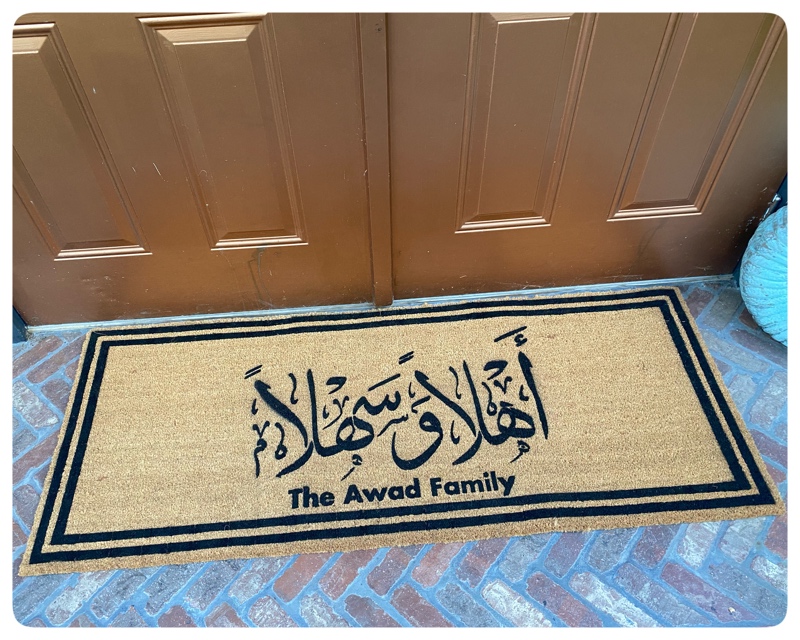
This mat exists because a customer asked me for it.
That's how a lot of my language mats start. Somebody writes in wanting words I don't have, in a language I don't speak, for a door I'll never stand at. And then I go do the homework, because putting a phrase on somebody's front step in their own language and getting it slightly wrong is worse than not making it at all.
This is when I love my customers the most, when they teach me something. new.
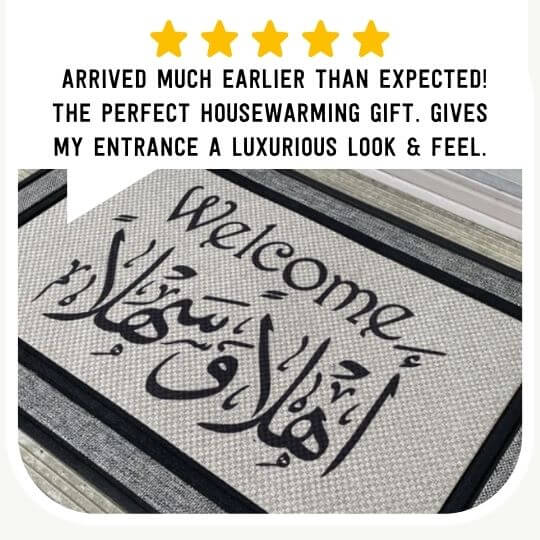
What ahlan wa sahlan actually means
If you type it into a translator you get one word back: welcome. That's true and it's useless, the way "cheers" translating to "thank you" is true and useless.
Ahlan wa sahlan is two words doing two different jobs, which is why an arabic welcome mat carrying it says considerably more than a mat that says welcome.
Ahlan comes from ahl, which means family. Not friends, not guests. Your people. The ones you don't announce yourself to.
Sahlan comes from sahl, which means level, easy ground. Flat land. The kind you can walk on without breaking an ankle, the kind you can put a camp on.
The phrase is a shortened version of a much older, longer one that ran roughly: you have arrived at family, and you have come down on easy ground. It's pre-Islamic, and you can hear the desert in it. Somebody riding in off hard country, getting down off the animal, and being told two things at once. These are your people now. And the ground here is soft.
That's the ahlan wa sahlan meaning nobody puts in the translation apps. It isn't a greeting so much as a guarantee, and it's a guarantee about two separate anxieties: am I welcome here, and is this going to be difficult.
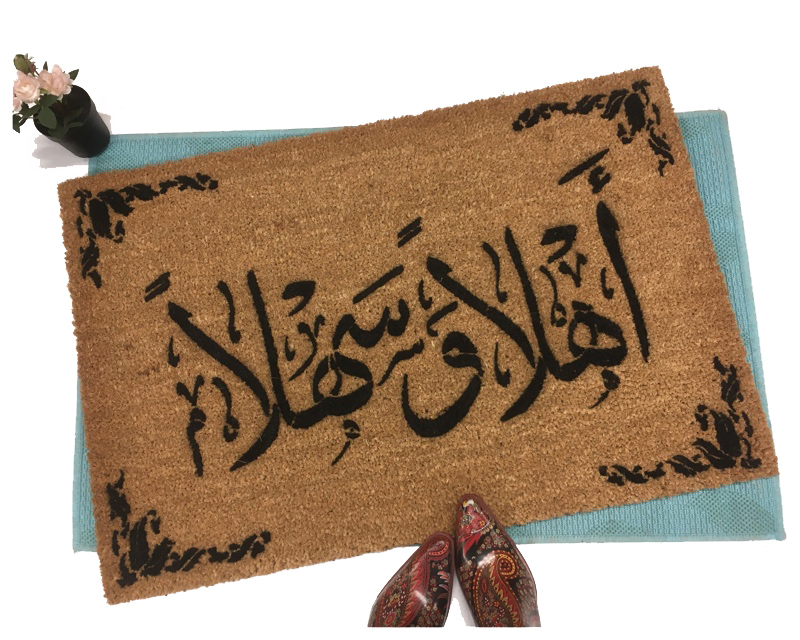
Why it belongs on the floor and not on a card
I've been putting words on coir since 2009 and I have opinions about which words earn the spot.
A phrase belongs on a doormat when the doorway is where the phrase was born. Ahlan wa sahlan qualifies more than almost anything I make. It's a threshold phrase. It is said by a host, to an arriving person, at the moment of arrival, and it's about the ground.
There's a whole culture of hospitality behind it that I'm not going to summarize for you in a doormat blog, because I'd get it wrong and it isn't mine to summarize. What I'll say is the part I can see from where I stand: somebody wanted this specific phrase, in this specific script, on the actual floor of an actual door. Not a sign. Not a sticker. The place your foot lands.
The two versions, and which one you want
I make an arabic doormat two ways, and people pick wrong about half the time, so let me save you the trouble.
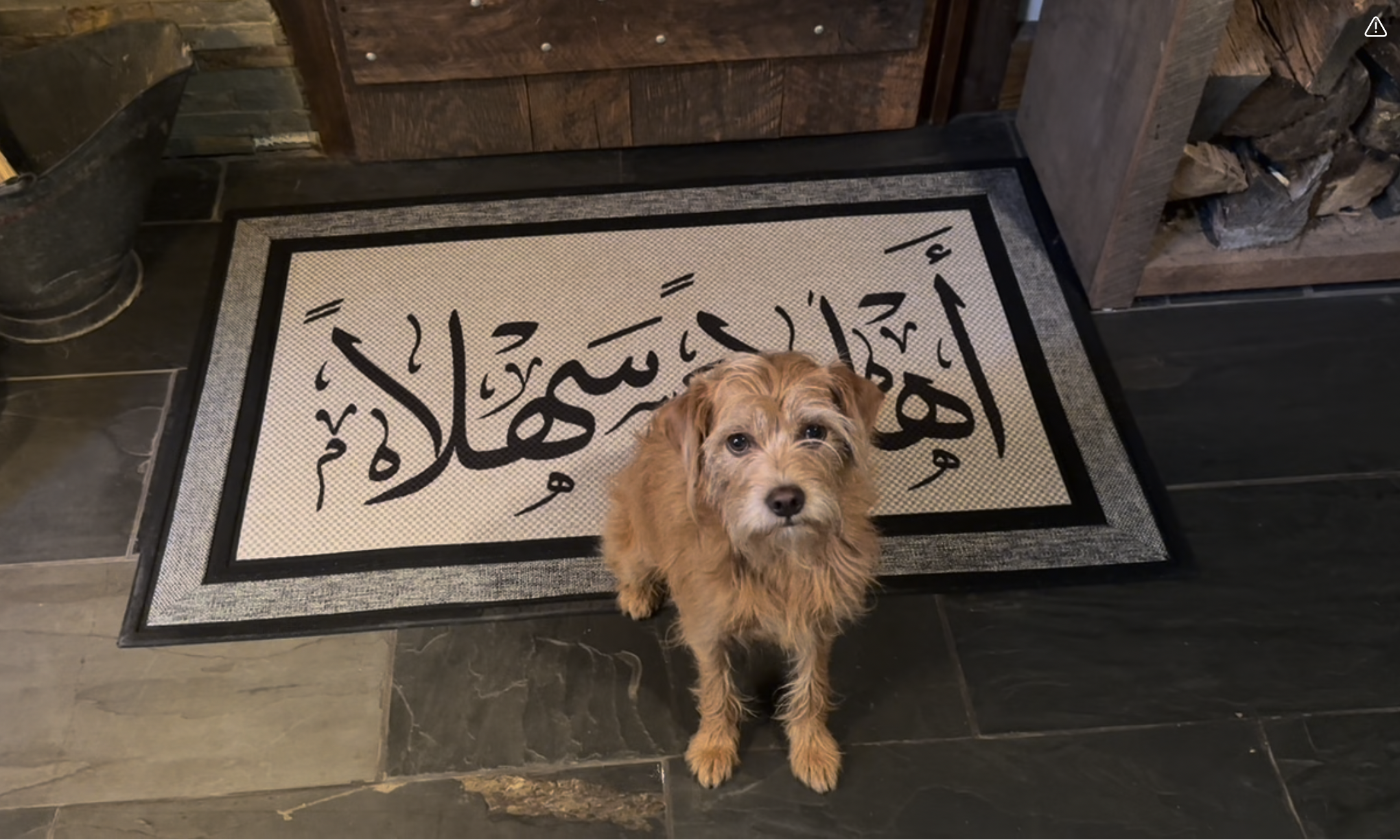
The Arabic-only mat is the one for a house where Arabic is the house language. It looks like what it is: a greeting, not a translation of a greeting. Nothing on it is explaining itself to anybody. If you're buying for your mother, this is almost certainly the one.
The bilingual mat has the English on it too. That's for a house where the door gets a mixed crowd, or for the kid who grew up bilingual and lives somewhere nobody else does. It does a slightly different job, and the job is: this is my house, both of these are true at once, come in.
Neither is more correct. They're for different doors.
A thing worth knowing about the script itself: Arabic is cursive, the letters change shape depending on where they sit in the word, and it reads right to left. That is not a font you can eyeball. An arabic welcome doormat with one letter in the wrong form is not a small typo, it's a mat that embarrasses whoever is standing on it, in front of the one audience who'd notice.
What I'm not
I'm a queer woman in a small shop who does not speak Arabic. I am not the authority on this phrase and I'm not going to pretend to be.
What I am is careful. When somebody asks for a language I don't have, the answer isn't "sure, sounds good." It's going and finding out, from people who actually know, before anything gets printed. Sometimes that takes a while and sometimes the answer comes back no.
That's the whole policy. If it's going on the floor of somebody's home in their family's language, it gets to be right.
The mats are UV printed on natural coir
Practical part, quickly, because this is where the marketing usually goes vague.
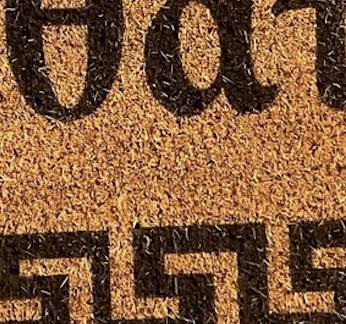
The mats are UV printed with high-quality inks onto natural coir, which is the fiber from a coconut husk. They have a PVC backing so they don't slide out from under an eighty-year-old. They are made in a small shop in small batches, they last years outdoors, and when one is finally done at the door it goes into the garden under mulch as a weed barrier, where that same PVC backing keeps it working for a few more years instead of rotting in one season.
That's the honest version of the eco story. Renewable fiber, plastic backing, long life. I'd rather tell you that than call it compostable, because it isn't.
Shop it
The Arabic-only mat is Ahlan Wa Sahlan, and the bilingual Arabic and English version is the one for a mixed doorway.
If your language isn't on the site yet, that's not a no. Ask me. This mat only exists because somebody did.
More on the whole language line over at welcome in every language, and everything else is at Damn Good Doormats.
Be well and enjoy wiping your feet! Spoon